Too many formulas
Students need to know what each variable represents and when to use each formula.
Physics home tuition in Penang
EduPro helps students understand formulas, visualise abstract concepts and apply Physics confidently in examination questions.
For students who need stronger formula understanding, clearer visual explanations and guided exam practice.
Why students struggle with Physics
Students need to know what each variable represents and when to use each formula.
Topics become clearer with diagrams, visual explanations and real-life examples.
Physics problem-solving often depends on accurate mathematical reasoning.
Structured, multiple-choice and data analysis questions need regular practice.
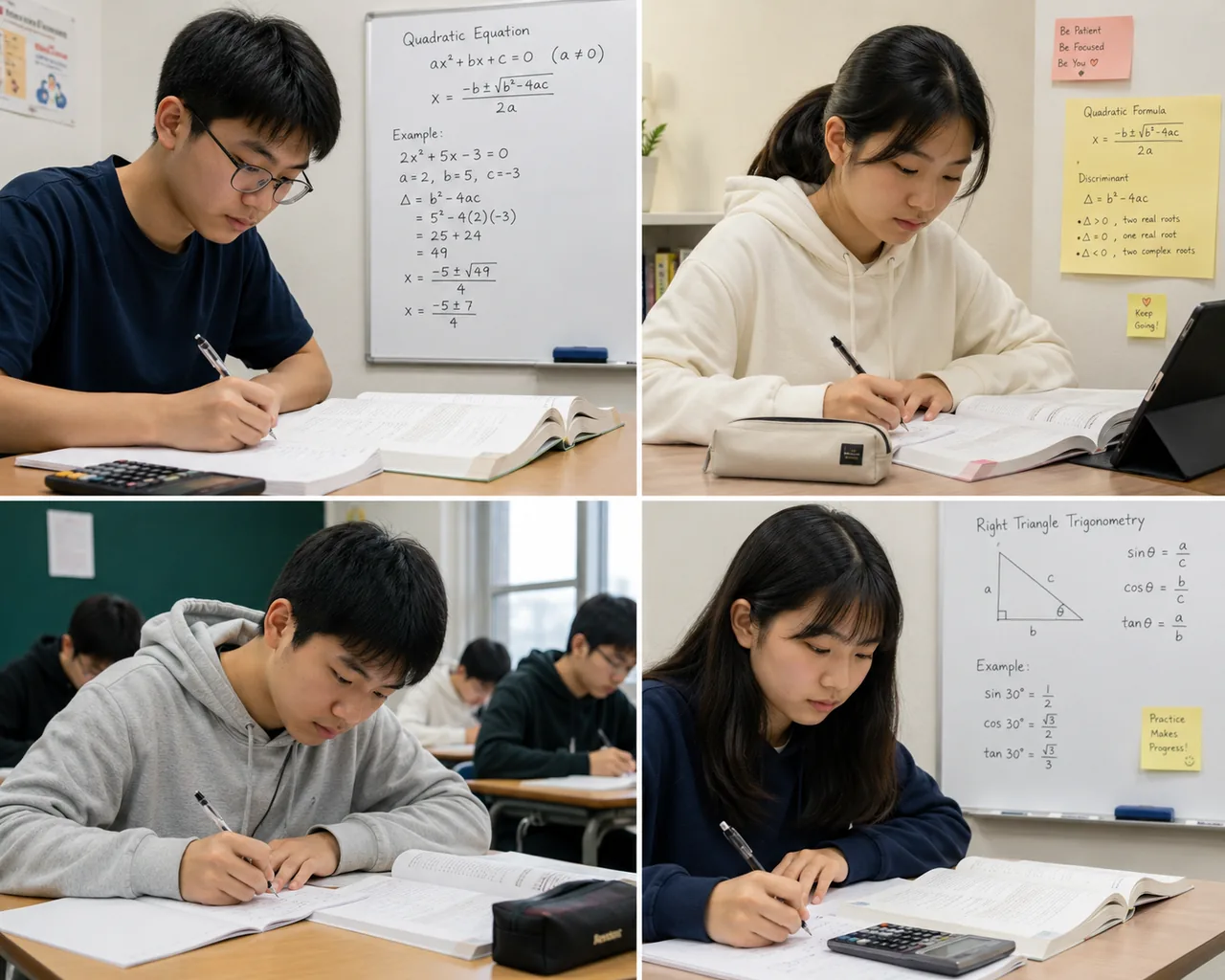
Teaching philosophy
Students learn why a formula exists, what each variable means and when to apply it.
Lessons use real-life examples, diagrams, illustrations and practical applications.
Students receive theory explanations, key definitions, formula summaries and worked examples.
Past-year, structured, multiple-choice, data analysis and higher-order questions are practised regularly.
What lessons include
Students learn why a formula exists, what each variable represents, when to apply a particular formula and how concepts relate to real-world situations.
Complex concepts are simplified using real-life examples, visual explanations, diagrams, illustrations, practical applications and step-by-step calculations.
Students receive theory explanations, key definitions, formula summaries, worked examples, examination tips and common mistakes to avoid.
Students practise past-year questions, structured questions, multiple-choice questions, data analysis questions, higher-order thinking questions and time-management techniques.
Topics covered
Speed, velocity, acceleration, distance-time graphs, velocity-time graphs, Newton's Laws of Motion and momentum.
Kinetic energy, potential energy, conservation of energy, work done, power and efficiency.
Pressure in solids, pressure in liquids, atmospheric pressure and hydraulic systems.
Temperature, heat transfer, conduction, convection, radiation, gas laws and thermal expansion.
Reflection, refraction, diffraction, interference and the electromagnetic spectrum.
Reflection, refraction, total internal reflection, lenses and optical instruments.
Production of sound, frequency, pitch, echoes and applications of sound.
Current, voltage, resistance, Ohm's Law, electrical circuits, and series and parallel circuits.
Magnetic fields, electromagnets, motors, generators and transformers.
Atomic structure, radioactivity, nuclear reactions and half-life.
Benefits and trust
Achieve success in Physics
With the right guidance, structured lessons and consistent practice, students can develop strong Physics knowledge, improve problem-solving skills and achieve better examination results.